Guatemala

Key Accomplishments
- Child mortality was reduced by 37%
- Maternal deaths from infection and eclampsia were eliminated
- Due to our education efforts, mothers who know how to properly diaper and dispose of infant teces increased by 44%
- Maternal mortality rate was decreased by 63%
The Impact of Your Donation
- $15 provides 2 pregnant women with prenatal vitamins throughout their pregnancies
- $50 provides one child with the necessary vaccinations vital for a healthy life
- $100 provides supplies for 4 safe deliveries including medications and care from trained medical staff
Project Overview
Join us at the APHA 2023 in Atlanta. Here are some helpful tools about our work, research and impact.
Additional Reports found at the bottom of this page and here – https://www.curamericas.org/cbio/
Since 2002, Curamericas Global has been working in partnership with Curamericas-Guatemala to reduce the rates of infant, child, and maternal mortality in the highlands of northwest Guatemala. With funding from USAID, Ronald McDonald House Charities, the Weyerhaeuser Family Foundation and many others, Curamericas has established a network of thousands of local Community Health Workers and volunteers that reach impoverished Mayans with vital health services and education. In 2015, Curamericas Global and our partners reached a population of 54,948, including 9,332 children under five years old.
We’re also proud to say that in 2015, there were ZERO maternal deaths in the partner communities of the Casa Maternas. What’s more impressive– we nearly eliminated deaths in children between 1 and 5 years old. To take a closer look, that means that we saved 31 mothers by getting them to the hospital when needed and ensured that 70% of women delivered in a health facility.
Curamericas Global’s Strategy
Curamericas uses a 3-pronged approach to build a sustainable, effective health care program that empowers communities to save the lives of mothers and children.
Health Education
Prevention is key. Curamericas’ health teams travel regularly to remote communities to teach mothers basic health education that will keep them and their children healthy. Health Workers and Community Health Volunteers meet with mothers in their homes and in groups to talk about important health practices such as breastfeeding, hand washing, and child spacing. Health education makes a huge difference and Curamericas has already seen the results. Because of the training they’ve received more women are practicing the safe disposal of their children’s feces, using soap in their homes for hand washing, and breastfeeding for the first 6 months.
This past year, Curamericas reached thousands of mothers through Community Health Volunteers using a training cascade. In 2015, 29 Health Educators trained 149 Community Facilitators, who then trained 779 Care Group Volunteers, reaching 14,488 mothers. In comparison to just the previous year, our efforts have grown and the overall number of trained Care Group Volunteers doubled.
Health Services
On their regular visits to the communities, Curamericas Health Workers provide essential health services such as:
- Immunization of children & at-risk pregnant women
- Prenatal checkups
- Distribution of vitamins and de-worming medicine to children
- Family planning services
Curamericas has also constructed 4 Casa Materna Maternity Clinics. These clinics are staffed 24 hours a day by local birth attendants and provide women with a safe, centrally-located and culturally appropriate facility for mothers to give birth and receive related services.
Empowering Communities
Community involvement begins on day 1. Before Curamericas begins a partnership it meets with community leaders to learn about their needs and desires. Data collection is next, giving communities an accurate portrayal of the health issues that cause death and illness in mothers and children.
Community members play an active role in the health of their neighbors by becoming Community Health Volunteers, working in the Casa Materna, and providing program support. Community Health Volunteers are the eyes and ears of the project, alerting Health Workers when a mother or baby has fallen ill or there is a new pregnancy in the community.
Project Area
The Curamericas-Guatemala project is located in one of the most isolated and impoverished areas of Guatemala. Curamericas currently works in the Department of Huehuetenango in the districts of San Miguel Acatán, Santa Eulalia, and San Sebastian Coatán. These areas are very rural and many communities cannot even be reached by vehicle. In San Miguel Acatán and San Sebastian Coatán, the Casas Maternas centers also serve women beyond the reaches of the immediate community; 35% of the deliveries in the Casas Maternas there are for women from neighboring communities who travel for the better healthcare.
These districts were directly affected by a 36-year civil war, which ended in 1996. Due to the war, there has been longstanding distrust of outsiders and community development activities. As a result, gaining the trust of the community and involving them in the development process has been critical.
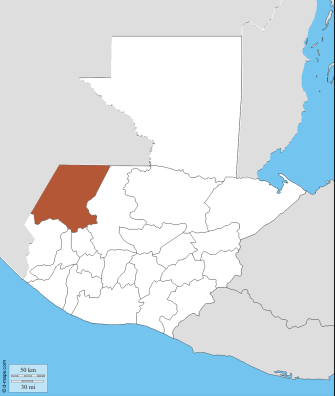
Curamericas Global has been able to expand the project into the surrounding districts due to the strong partnership with Curamericas-Guatemala and the local communities, in addition to support from organizations such as USAID and Ronald McDonald House Charities, as well as churches and individuals.
Project Reports
Focused Strategic Assessment 2016
USAID Casa Maternas Case Study 2015
Integration of the Extension of Coverage Program 2015
For more information about our work in Guatemala, please contact us at (919)510-8787 or email our office at [email protected].